Dexron Mercon Comparison: Choose the Right ATF
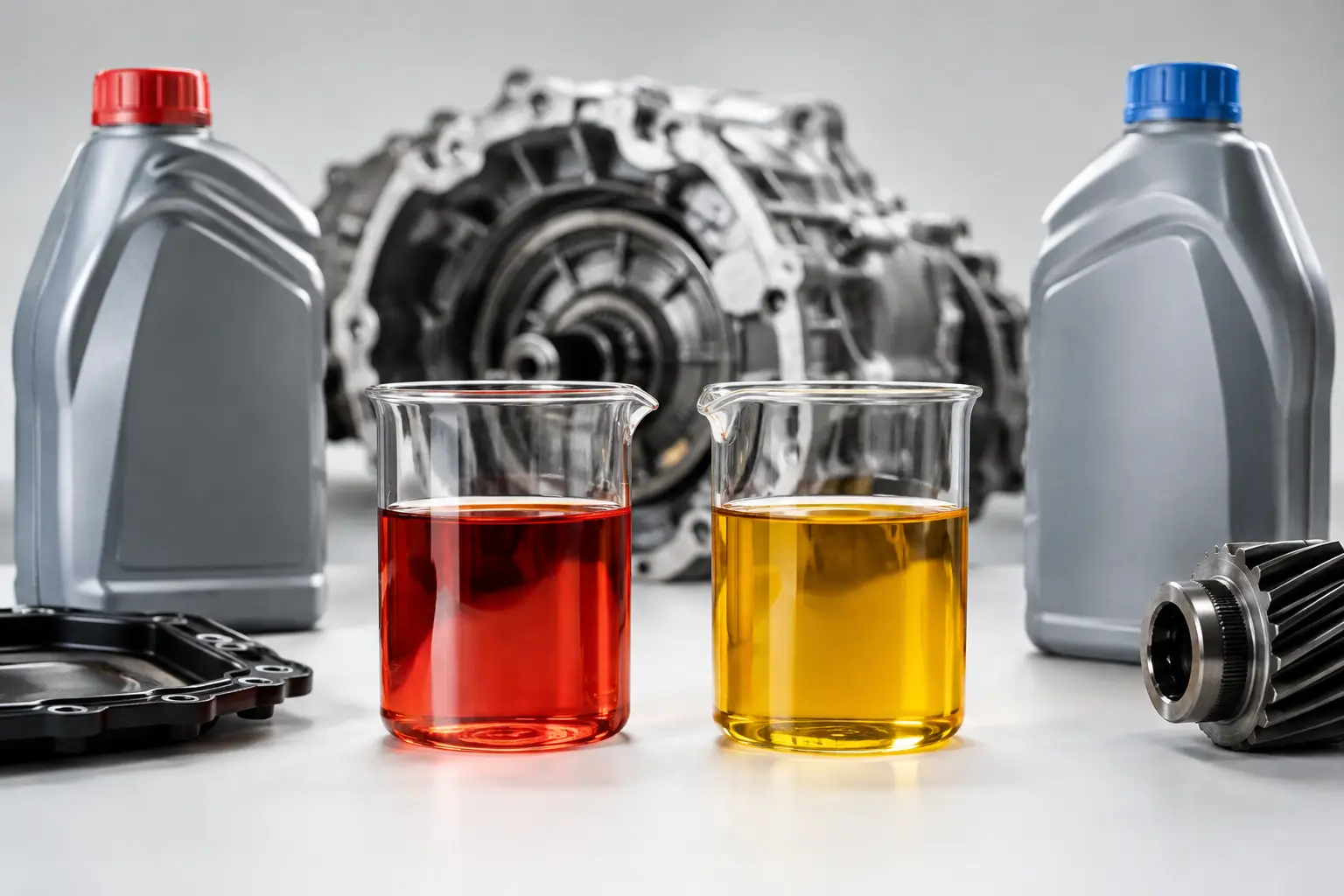
A Dexron Mercon comparison is not just an exercise in reading labels. Automatic transmission fluid is a working hydraulic fluid, friction modifier, coolant, and lubricant in one package. Put the wrong fluid in a transmission, transfer case, or power-steering system and the result can be poor shift quality, clutch wear, overheating, or an expensive drivability problem that did not need to happen.
For truck owners, repair shops, fleets, and equipment operators, the right approach is simple: match the fluid to the exact specification required by the manufacturer, then choose a quality formulation built to hold that performance under real operating conditions. The words Dexron and Mercon are familiar, but they are not interchangeable catch-all terms.
What Dexron and Mercon Actually Mean
DEXRON is a General Motors automatic transmission fluid specification family. MERCON is Ford’s equivalent family of specifications. Both names have appeared on fluid containers for decades, which is why many drivers assume they describe one universal type of automatic transmission fluid. They do not.
Each family has evolved as transmissions gained more gears, tighter hydraulic controls, different clutch materials, and more aggressive fuel-economy targets. A fluid that worked in an older three- or four-speed unit may have the wrong viscosity or friction characteristics for a modern six-, eight-, or 10-speed transmission.
The key distinction is not whether a bottle says Dexron, Mercon, or Dex/Merc. The key is whether the product label specifically states it meets or is suitable for the exact fluid specification in the owner’s manual or service information.
Dexron Mercon Comparison: The Differences That Matter
The most meaningful differences are viscosity, friction behavior, oxidation resistance, and the additive package used to protect internal components. These properties affect how clutch packs engage, how fast hydraulic circuits respond, and how well the fluid survives heat.
DEXRON-VI and earlier GM applications
DEXRON-VI is a common modern GM specification and is generally a lower-viscosity fluid than the older DEXRON-III products it replaced. It was engineered for improved oxidation stability, consistent shifting, and longer fluid life in compatible GM applications. In many cases, DEXRON-VI is backward compatible with transmissions originally calling for earlier DEXRON fluids, but the vehicle manual and GM service guidance should always control the decision.
That does not mean DEXRON-VI belongs in every older vehicle with an automatic transmission. Some specialty units, certain imports, and non-transmission components may call for a different fluid even when the vehicle manufacturer once referenced Dexron terminology.
MERCON V, MERCON LV, and newer Ford fluids
Ford applications require even more caution because MERCON fluids are not one-size-fits-all. MERCON V served many older Ford transmissions and has a distinct friction profile. MERCON LV is a lower-viscosity fluid used in numerous later Ford transmissions and is not simply an upgraded version of MERCON V for every application.
Ford also uses specialized fluids such as MERCON SP, MERCON ULV, and other application-specific formulations. These are designed around particular transmission designs. Using MERCON V where MERCON LV is specified, or substituting a generic Dex/Merc fluid for a specialized Ford requirement, can cause harsh engagement, converter-clutch shudder, or accelerated wear.
The legacy Dex/Merc label
Many multi-vehicle ATFs historically carried Dex/Merc language for older applications that called for DEXRON-III or the original MERCON specification. That label can be useful for the correct legacy application, but it is not a license to use the fluid wherever either brand name appears.
Original MERCON has been discontinued, and modern Ford specifications are not automatically compatible with it. Likewise, a fluid marketed for older Dex/Merc service is not a replacement for DEXRON-VI unless the manufacturer clearly states that it meets the required DEXRON-VI performance level.
Why Viscosity and Friction Properties Cannot Be Guessed
Transmission fluid viscosity affects hydraulic pressure and flow. If the fluid is too thick, cold shifts can feel slow or firm and hydraulic circuits may not react as designed. If it is too thin for the application, internal leakage can increase at operating temperature and reduce the pressure needed to apply clutches correctly.
Friction modifiers are just as critical. Transmission clutch materials need a carefully controlled engagement curve. The goal is neither maximum slipperiness nor maximum grip. The fluid must allow smooth, repeatable clutch engagement without shudder, flare, or harsh shifts.
This is why a transmission may seem to operate normally for a short period after receiving the wrong ATF. The immediate symptom may be subtle, while the long-term damage builds through excess heat, glazing, and clutch debris. Saving a few dollars on a questionable fluid is not a practical maintenance strategy when a transmission repair can put a truck or fleet vehicle out of service for days.
How to Select the Right ATF
Start with the owner’s manual, service manual, or the identification information on the transmission itself. Identify the required specification exactly, including letters after the name. MERCON V and MERCON LV are different requirements. DEXRON-III and DEXRON-VI are different requirements.
Next, read the fluid label closely. Look for a direct statement of the specification the product meets or is recommended for. Do not select a fluid based only on bottle color, a broad “universal ATF” description, or a counterperson’s assumption that all red transmission fluids are alike.
For professional shops and fleet operations, document the specification with the service record. This is especially useful when multiple technicians maintain mixed fleets of Ford, GM, Ram, import, and vocational vehicles. A clear fluid policy reduces mistakes, protects warranty compliance, and makes inventory control easier.
When the application calls for a manufacturer-specific fluid, use that exact type. When a high-quality multi-vehicle synthetic ATF lists the required specification, it can provide a practical way to consolidate inventory without compromising compatibility. The specification claim comes first. Convenience comes second.
Where Synthetic ATF Earns Its Keep
Synthetic automatic transmission fluid can offer meaningful advantages in severe service because it is formulated to resist heat, oxidation, and viscosity loss. That matters for towing, stop-and-go commercial routes, off-road operation, snowplowing, racing, and high ambient temperatures.
Heat is one of the largest threats to ATF life. As fluid degrades, it can form varnish, lose friction consistency, and leave deposits in narrow valve-body passages. A properly matched synthetic formulation can help maintain clean operation and reliable shift performance over a demanding service interval.
Oil Jobber supplies premium synthetic lubrication solutions for operators who cannot afford to treat fluid choice as an afterthought. Whether you are servicing one pickup or maintaining a working fleet, the objective is the same: use the correct specification and protect the equipment that earns its keep.
Common Mistakes in a Dexron Mercon Comparison
The first mistake is treating brand families as fluid types instead of specifications. “Dexron” and “Mercon” alone are often not enough information to make a safe selection.
The second is assuming backward compatibility works in both directions. A newer fluid may be approved for certain older applications, but an older fluid should never be assumed suitable for a newer transmission. Always verify the direction of compatibility.
The third is overlooking related components. Some transfer cases, power-steering systems, and hydraulic systems call for ATF, but they may require a specific version that differs from the transmission. Check each component separately.
Finally, do not confuse a transmission service problem with a fluid-selection problem. If the fluid is burned, the pan contains heavy debris, or the transmission is already slipping, replacing fluid alone may not correct the underlying mechanical issue. Correct diagnosis protects the customer and prevents repeat repairs.
Make Fluid Selection Part of Preventive Maintenance
The right ATF is only one part of transmission protection. Use the service interval recommended for the vehicle’s operating conditions, not just the most optimistic interval listed for light-duty driving. Towing, idling, extreme temperatures, and frequent short trips all qualify as harder service in many manuals.
Inspect fluid condition where the system allows it, watch for leaks, and address overheating before it becomes a transmission failure. If your vehicle sees demanding work, selecting the correct Dexron or Mercon specification is one of the lowest-cost decisions you can make to protect shift quality, uptime, and long-term operating costs.