How to Clean Fuel Injectors Without Guesswork
A rough idle at a stoplight, a hesitation under load, or a truck that suddenly burns more fuel can point to injector deposits. Before replacing expensive parts, learn how to clean fuel injectors using the method that fits the vehicle, the symptoms, and the severity of the problem. The right approach can restore spray quality and drivability. The wrong approach can waste time, damage components, or mask a mechanical fault.
Fuel injectors are precision metering devices. They deliver a controlled amount of fuel in a specific spray pattern, often thousands of times per minute. Heat soak after shutdown, short-trip driving, fuel oxidation, moisture, and combustion deposits can gradually interfere with that process. For fleet vehicles, work trucks, powersports equipment, and personal vehicles alike, keeping the fuel system clean supports more consistent performance and avoids preventable downtime.
Start by Confirming the Injector Is the Problem
Not every misfire, hard start, or loss of power is caused by dirty injectors. Ignition coils, spark plugs, weak fuel pressure, vacuum leaks, restricted air filters, failing sensors, and low compression can create nearly identical symptoms. On diesel equipment, issues with fuel contamination, air intrusion, injector wiring, high-pressure pump performance, or filtration also need to be ruled out.
A scan tool is a strong first step on modern vehicles. Check for trouble codes, fuel-trim readings, misfire counts, and cylinder balance information where available. A fuel-pressure test and visual inspection of intake plumbing may identify a more direct problem. If one cylinder is consistently misfiring, swapping an ignition coil or checking the spark plug can prevent an unnecessary injector service.
Injector deposits are more likely when the engine has a rough but otherwise consistent idle, mild throttle hesitation, reduced fuel economy, or a gradual loss of response with no obvious ignition or air-intake issue. A cleaning treatment is a sensible maintenance step in those cases. It is not a cure for a failed injector solenoid, a cracked injector body, internal wear, or a severely restricted unit.
How to Clean Fuel Injectors With a Tank Additive
For most running gasoline engines with mild symptoms, a high-quality concentrated fuel-system cleaner added to the fuel tank is the simplest place to start. This method is low-risk, requires no disassembly, and can help remove deposits from injectors, intake valves in port-injected engines, and combustion chambers over normal operation.
Choose a cleaner designed for the fuel type and follow the treatment ratio on the label. Adding it before filling the tank helps distribute it evenly. Then drive the vehicle through a normal operating cycle, preferably including sustained highway operation that brings the engine fully to temperature. A cleaner works best when it has time to circulate through the system under real load.
Do not assume that doubling the dose will produce twice the result. Over-treating fuel can create drivability problems and provides no reliable benefit. For equipment with small tanks – motorcycles, ATVs, snowmobiles, lawn equipment, and portable engines – careful measurement matters even more.
For preventive maintenance, a tank treatment used at appropriate intervals can be a practical part of a broader service plan. It should work alongside clean fuel, on-time filter changes, and the correct oil and air-filtration practices, not replace them. Oil Jobber customers maintaining hard-working trucks and equipment should match the additive to the application rather than using a one-size-fits-all product across gasoline and diesel fleets.
What Tank Cleaners Can and Cannot Do
A quality additive can improve deposits that are still chemically removable. It may smooth idle quality, reduce hesitation, and help recover lost fuel economy when injector fouling is genuinely the cause. Results vary based on deposit severity, engine design, fuel quality, and how long the issue has been present.
It will not repair an injector with an electrical failure, a damaged nozzle, a leaking seal, or a mechanical blockage. It also cannot correct poor fuel pressure or a plugged fuel filter. If the check-engine light flashes, the engine is severely misfiring, or there is a strong raw-fuel odor, stop treating the issue as routine maintenance and diagnose it promptly. Continued operation can damage catalytic converters on gasoline vehicles and create more expensive repairs.
Use an On-Vehicle Pressurized Cleaning Service for Stubborn Deposits
When a tank additive does not improve confirmed injector-related symptoms, an on-vehicle pressurized cleaning service may be appropriate. This procedure is usually performed by a qualified shop. The technician disables the vehicle’s fuel supply, connects a pressurized cleaning canister to the fuel rail, and runs the engine on a concentrated cleaning solution for a controlled period.
This method exposes the injectors to a stronger cleaner than a tank treatment. It can be effective on gasoline engines with moderate deposits, but it demands correct adapters, proper pressure control, ventilation, and strict fire safety. Fuel-system service involves flammable liquid under pressure. It is not a good shortcut for an inexperienced DIY technician.
Modern direct-injection gasoline engines deserve an additional caution. Their fuel injectors spray directly into the combustion chamber, so a fuel additive can clean injector tips but does not wash over the intake valves. Intake-valve deposits on these engines often require a separate induction or manual cleaning procedure. Treating the fuel system may still be worthwhile, but it will not solve every carbon-related drivability complaint.
When to Remove and Bench Clean Injectors
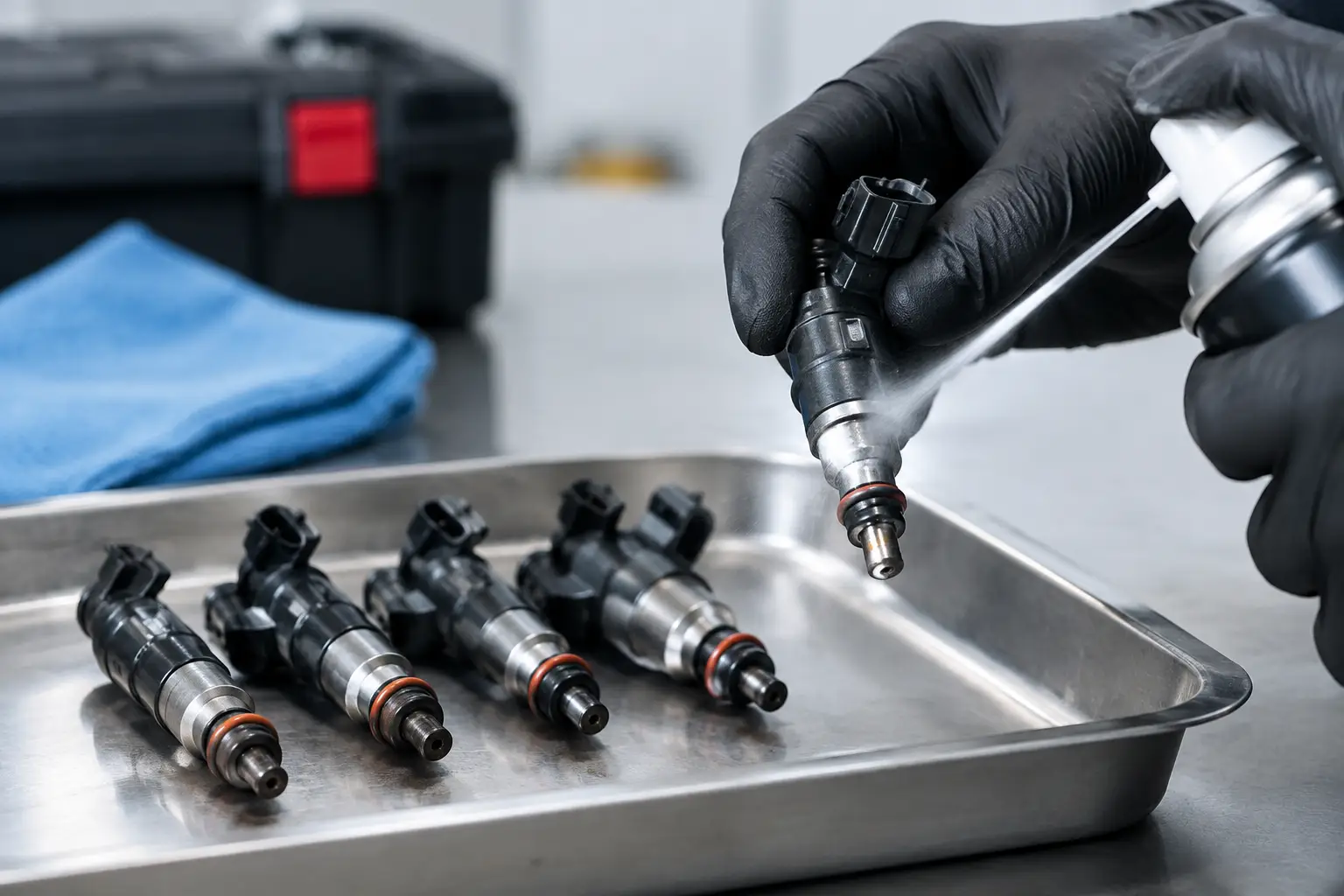
Removal and professional bench cleaning is the right call when an injector has a persistent cylinder-specific issue, poor flow balance, an abnormal spray pattern, or no improvement after appropriate on-car service. A professional injector service typically tests electrical resistance, checks leakage, measures flow, ultrasonic-cleans the injectors, replaces serviceable filters and seals, and retests the units.
This approach provides something an in-tank cleaner cannot: measurable results. A flow report can show whether the injectors deliver fuel evenly and whether one unit remains outside specification. That matters on performance engines, high-mileage trucks, marine applications, and equipment where a lean cylinder can drive excessive combustion temperatures.
Replacement may still be the better business decision. If an injector fails electrical testing, has physical damage, remains out of balance after cleaning, or costs little compared with the labor required to remove it twice, install a quality replacement. For common-rail diesel systems, use extra caution. Diesel injectors operate at extremely high pressures, and improper service can cause serious injury or costly damage. Diesel diagnosis and repair belong with technicians who have the correct equipment and clean-room-level handling practices.
Protect the Fuel System After Cleaning
Cleaning injectors is more useful when the conditions that created deposits are addressed. Start with dependable fuel from a busy supplier, particularly for equipment that sits between seasons. Keep water and contamination out of storage tanks and portable cans. Replace fuel filters at the manufacturer-recommended interval, or earlier when operating in dusty, remote, or questionable-fuel conditions.
For gasoline vehicles, avoid letting fuel sit for extended periods without a suitable stabilizer. For diesel fleets and equipment, water management and filtration are central to injector life. Modern high-pressure diesel systems have tight tolerances, and contaminated fuel can damage injectors and pumps far faster than normal deposit buildup.
Operating habits also matter. Repeated short trips can leave an engine below full operating temperature and encourage deposit formation. When practical, give vehicles and equipment enough run time under normal load to reach and maintain temperature. That is especially relevant for work trucks, seasonal powersports machines, and standby equipment that spends more time idling or sitting than working.
Know When Cleaning Is Not the Smart Repair
Injector cleaning is a maintenance and diagnostic tool, not an automatic answer to every fuel-system complaint. Seek professional diagnosis if you see a flashing check-engine light, visible fuel leaks, heavy smoke, a no-start condition, fuel in the engine oil, severe knocking, or a sudden major drop in power. These symptoms can indicate problems that require immediate attention.
A clean fuel system supports efficient combustion, but reliable operation depends on the whole maintenance picture: correct fuel, clean filtration, sound ignition or compression, and lubricants built for the demands of the engine. Start with the least invasive proven method, verify the result, and move to bench testing or replacement only when the evidence supports it. That disciplined approach protects both the equipment and the maintenance budget.