What Causes Diesel Oil Dilution in Your Engine?
A rising oil level on the dipstick is not a sign that your diesel engine is making oil. It is often a warning that fuel is entering the crankcase and thinning the lubricant your engine depends on for protection. Understanding what causes diesel oil dilution can help truck owners, fleet managers, and equipment operators catch a small combustion or emissions-system problem before it becomes accelerated wear, bearing damage, or costly downtime.
Diesel fuel dilution occurs when unburned fuel bypasses the combustion chamber and mixes with engine oil. Even a small amount can reduce oil viscosity, weaken the lubricating film, and lower the oil’s ability to control heat, soot, and wear. The right oil matters, but no oil can indefinitely overcome a mechanical or operating condition that keeps adding fuel to the crankcase.
What Causes Diesel Oil Dilution?
At its core, diesel oil dilution happens when fuel does not fully burn or does not stay contained where it belongs. Modern diesel engines add complexity because their emissions systems may introduce extra fuel during specific operating events. Older engines can experience dilution for different reasons, including injector wear, poor compression, or excessive idling.
The severity depends on the engine design, fuel system, duty cycle, ambient temperature, and the amount of fuel entering the oil. A short-term trace amount may not create an immediate failure. Persistent dilution is different. It can quickly turn a scheduled oil change into a serious maintenance issue.
Active Regeneration and Post-Injection Fueling
Diesel particulate filter regeneration is one of the most common contributors in late-model light-duty diesel trucks. During an active regeneration cycle, the engine management system raises exhaust temperature to burn accumulated soot from the diesel particulate filter, or DPF.
Some engines use late or post-injection events to support this process. Under normal conditions, that fuel burns in the cylinder or exits as intended through the exhaust stream. But frequent interrupted regenerations, short-trip operation, extended idling, or low-load driving can prevent the engine and exhaust system from reaching the temperatures needed to complete the cycle efficiently.
When regeneration attempts are repeated, a portion of the late-injected fuel can wash past the cylinder walls and enter the crankcase. This is why a diesel truck that spends most of its time making short runs, idling at job sites, or operating in cold weather may be more vulnerable than one that regularly works under sustained load.
Leaking or Faulty Fuel Injectors
An injector that dribbles, sticks open, sprays poorly, or delivers too much fuel can create a direct path to oil dilution. Instead of producing a clean, properly timed fuel spray, the injector may leave excess fuel on the cylinder wall. That fuel can slip past the piston rings and contaminate the oil.
Injector problems are especially concerning because they can also cause rough running, hard starts, white or black exhaust smoke, reduced fuel economy, and elevated soot loading. Common-rail diesel systems operate at extremely high pressures, so injector diagnosis should be handled with appropriate testing equipment and experienced service support.
Worn Piston Rings, Cylinder Walls, or Poor Compression
Piston rings provide a critical seal between combustion pressure and the crankcase. If rings are worn, stuck, damaged, or unable to seal correctly because of cylinder wear, blow-by increases. Fuel and combustion gases have a greater opportunity to pass into the crankcase.
Poor compression can also make cold starts harder and combustion less complete, increasing the chance of raw fuel reaching cylinder walls. On a high-hour work truck, agricultural machine, or heavily used piece of equipment, this can be part of a broader wear pattern rather than a standalone issue.
Oil dilution caused by ring or cylinder wear will not be corrected with a thicker oil alone. A premium synthetic diesel oil can provide strong protection under demanding conditions, but it cannot restore lost compression or repair mechanical damage.
Excessive Idling and Light-Duty Operation
Idling is hard on diesel oil for several reasons. At idle, combustion temperatures are lower, cylinder pressure is reduced, and the engine may not reach the conditions needed to evaporate normal traces of fuel and moisture from the oil. On emissions-equipped engines, long idle periods can also interfere with successful DPF regeneration.
This does not mean every idle period creates an oil dilution problem. Service trucks, emergency equipment, delivery vehicles, and job-site machines sometimes must idle. The issue is repeated low-temperature operation without enough sustained work afterward to bring the engine fully up to operating temperature.
If your equipment regularly idles, review the manufacturer’s idle-management guidance and maintenance schedule. In many cases, reducing unnecessary idle time and scheduling periodic loaded operation can make a measurable difference.
Cold Starts and Short Trips
Cold weather raises the risk of fuel dilution because fuel does not atomize and burn as efficiently in a cold cylinder. The engine oil is also thicker at startup, and it takes time for components to reach normal clearances and operating temperatures.
Short trips compound the problem. The engine may shut down before the oil gets hot enough to drive off volatile fuel contamination. A diesel pickup used only for a few miles at a time can experience more dilution than a similar truck used to tow, haul, or commute at highway speed.
Block heaters, properly functioning glow plugs or intake heaters, and winter-appropriate fuel practices all support easier starting and cleaner combustion. They do not eliminate the need for an oil service interval suited to the vehicle’s actual use.
Why Diluted Diesel Oil Is a Serious Problem
Fuel dilution lowers viscosity. When oil becomes thinner than intended, the protective film separating moving metal surfaces can weaken. Bearings, camshafts, piston rings, turbocharger components, and valvetrain parts may see more metal-to-metal contact under load.
Dilution can also reduce the oil’s flash point and interfere with additive performance. In a diesel engine already managing soot, heat, and high cylinder pressures, this loss of margin matters. For commercial operators, the real cost is not just an oil change. It is the risk of a missed route, an out-of-service truck, a delayed project, or a premature engine repair.
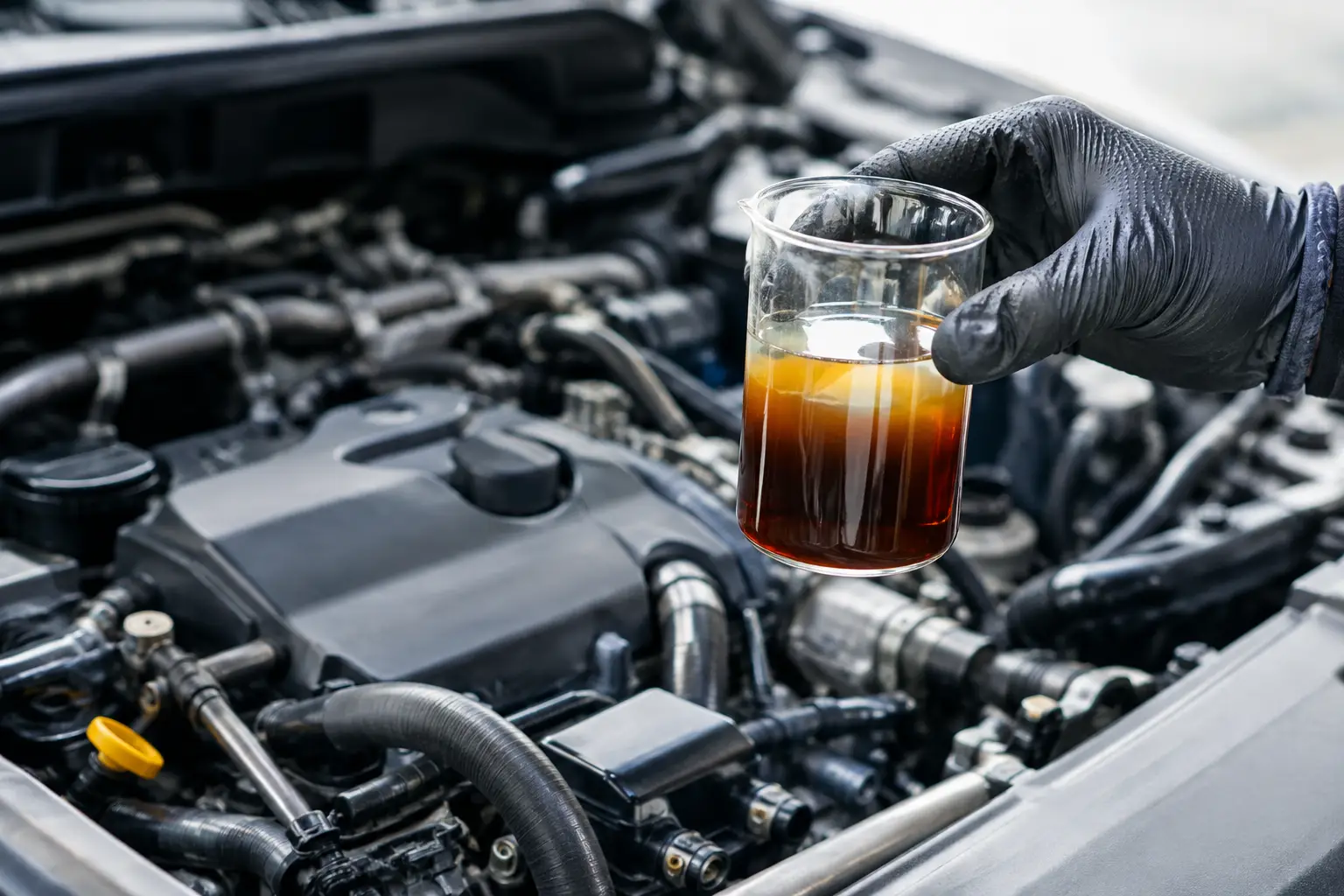
Do not rely on color alone. Diesel oil darkens quickly because it suspends soot, even when it is in good condition. A rising oil level, strong fuel smell on the dipstick, unusually thin oil, more frequent regeneration messages, rough operation, or declining fuel economy are more useful warning signs.
How to Confirm Fuel Dilution
The most reliable answer comes from used oil analysis. A laboratory can measure fuel contamination and evaluate viscosity, soot, oxidation, wear metals, and other indicators that show how the lubricant and engine are performing.
For fleets and operators with high-value diesel assets, trend testing is more useful than testing only after a concern appears. Establish a baseline with samples taken at consistent intervals. If fuel dilution rises from one report to the next, you have a reason to inspect the operating pattern, regeneration history, injector performance, and mechanical condition before the engine suffers avoidable wear.
Oil analysis also helps separate fuel dilution from other causes of an oil-level increase, such as coolant contamination or an incorrect fill level. Those conditions require different repairs, and guessing can waste time and money.
Preventing Diesel Oil Dilution
Prevention starts with matching maintenance to real operating conditions, not just the easiest interval on a calendar. A diesel that tows, hauls, idles, plows, operates in extreme cold, or makes repeated short trips may require more attention than one used primarily on long highway runs.
Use the correct specification and viscosity for the engine, climate, and emissions system. Quality synthetic diesel oil provides stronger resistance to heat, soot-related thickening, and viscosity loss than conventional options, giving your engine more protection when severe service is unavoidable. It is a safeguard, not a substitute for fixing faulty injectors, incomplete regenerations, or worn internal components.
Keep fuel filters on schedule, address check-engine lights promptly, and avoid repeatedly shutting the engine down during an active regeneration when practical. If a vehicle shows a rising oil level or a clear fuel odor at the dipstick, do not stretch the oil change interval. Change the oil and filter as needed, then diagnose why the fuel entered the crankcase.
For businesses that depend on trucks and equipment every day, a disciplined oil program protects more than the engine. It protects uptime, labor schedules, customer commitments, and operating margins. Oil Jobber can help operators select premium AMSOIL diesel lubrication for the demands of their equipment, but the strongest protection comes from pairing the right oil with timely diagnostics and maintenance that fits the job.
A diesel engine should earn its service interval through clean operation and verified oil condition. When the dipstick says otherwise, treat it as an early maintenance signal, not something to monitor until the next scheduled change.