Best Gear Oil for Differential Applications
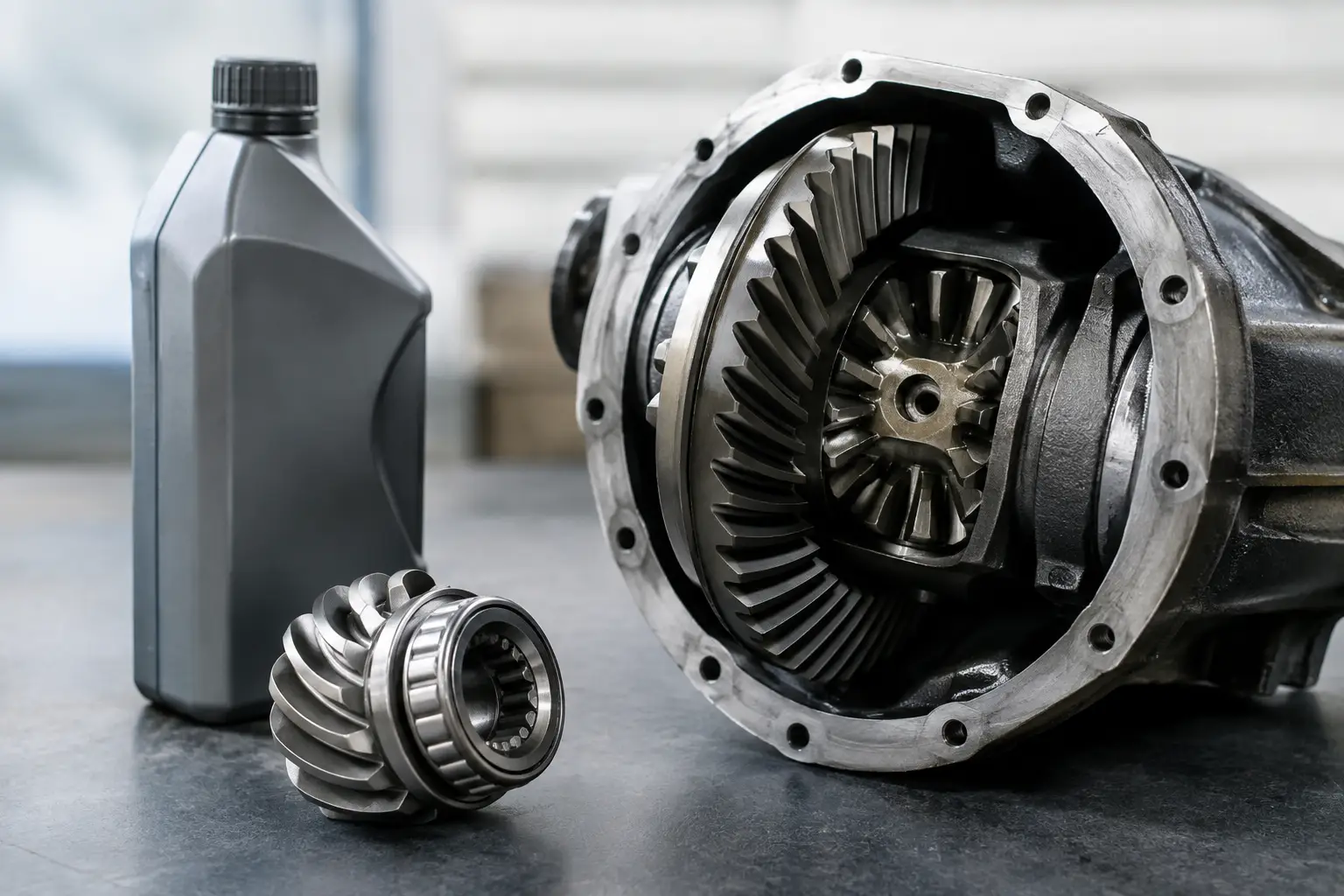
A differential does not get much attention until it starts whining, chattering through turns, or leaving metal behind in the drained lubricant. By that point, the repair can involve bearings, ring-and-pinion gears, seals, or an entire axle assembly. Choosing the best gear oil for differential service is one of the simplest ways to protect expensive drivetrain components before wear turns into downtime.
The right choice is not automatically the thickest oil on the shelf or the product with the biggest performance claim. It is the lubricant that matches the axle manufacturer’s viscosity, performance specification, and friction requirements, then delivers the film strength and thermal stability your work actually demands.
Best gear oil for differential protection starts with the manual
Start with the vehicle or equipment manual, axle tag, or service information. Differentials are built with specific bearing clearances, gear geometry, seal materials, and operating temperatures in mind. The required lubricant grade is part of that design.
Most modern light-duty trucks, SUVs, cars, and powersports machines call for a gear lubricant such as 75W-90 or 75W-140. Some older axles and heavy-duty applications may specify 80W-90, 85W-140, or another grade. Those numbers matter. The first number indicates cold-flow behavior, while the second reflects viscosity at operating temperature. A 75W-90 synthetic gear oil can flow well during a cold start while retaining the high-temperature protection expected from an SAE 90 grade.
Do not substitute a different viscosity simply because it appears heavier-duty. Moving from 75W-90 to 75W-140 may make sense for a manufacturer-approved towing, racing, or high-heat application, but it can also increase drag and reduce cold-temperature flow in an axle designed for a lighter grade. The correct answer depends on the axle, load, climate, and duty cycle.
Beyond viscosity, confirm the required service classification. Many hypoid differentials require an API GL-5 gear lubricant because the ring-and-pinion gears operate under extreme pressure. GL-5 lubricants use specialized extreme-pressure chemistry to protect gear teeth under high sliding loads. That does not mean every gearbox should receive GL-5 fluid. Certain manual transmissions and transfer cases have their own fluid requirements, including synchronizer compatibility requirements that are not interchangeable with differential needs.
Limited-slip differentials need the right friction behavior
A limited-slip differential adds another decision point. Clutch-type limited-slip units need carefully controlled friction characteristics so the clutches engage properly without chatter during slow turns. Some gear lubricants are already formulated for limited-slip differentials, while others require a separate friction modifier.
The key word is require. If the OEM specifies a limited-slip additive, use a compatible lubricant and additive package in the stated amount. If the lubricant already meets the axle’s limited-slip requirement, adding more modifier can reduce clutch holding power and change how the differential works. More additive is not automatically better.
Electronic locking differentials, mechanical lockers, torque-biasing units, and open differentials may have different needs. A locker may not need friction modifier at all, while a clutch-pack limited-slip unit often does. Verify the axle type before ordering fluid, especially on used trucks, modified off-road vehicles, and fleet equipment with replacement axles.
Why synthetic gear oil earns its place in severe service
Conventional gear oil can work well when it meets the required specification and is changed on schedule. Synthetic gear lubricant becomes particularly valuable when the axle sees sustained heat, heavy loads, long drain intervals allowed by the manufacturer, cold starts, or repeated stop-and-go operation.
A premium synthetic formulation is engineered to maintain viscosity across a broad temperature range, resist oxidation, and provide a durable protective film under extreme pressure. That matters when a pickup is towing on summer grades, a service truck idles and runs loaded all day, or an off-road machine works through mud, water, and low-speed high-torque conditions.
The practical benefits are straightforward: better cold-flow characteristics, stronger resistance to heat-related breakdown, reduced deposits, and reliable gear protection under load. Those benefits can support longer component life, but they do not eliminate the need for inspections or proper service intervals. Water intrusion, seal failure, and metal contamination will shorten the life of any lubricant.
For operators who demand severe-service protection, premium synthetic gear lubricants from AMSOIL are designed to provide high-load protection and dependable performance across demanding temperatures. The final selection should still match the exact viscosity and differential requirement listed by the equipment manufacturer.
Match gear oil to how the equipment is used
The best gear oil for differential durability should fit the application, not just the vehicle category. A commuter SUV, a plow truck, a rock-crawling Jeep, and a Class 8 truck can all use differential oil, but their operating conditions are not remotely alike.
A light-duty vehicle driven mostly on the highway may follow the normal service interval in its manual. A truck that tows equipment, carries a constant load, or sees frequent short trips puts more heat into the differential. Construction equipment, farm machinery, commercial fleets, and off-road units often face dust, moisture, shock loading, and extended operating hours. These are severe-service conditions, and they justify closer inspection and more conservative maintenance planning.
Use these four questions before selecting a product:
- What viscosity and API or OEM specification does the axle require?
- Is the differential open, limited-slip, locking, or electronically controlled?
- Does the equipment tow, haul, plow, race, operate off-road, or run in extreme temperatures?
- Is the axle exposed to water, mud, dust, or long service intervals?
For a business managing multiple assets, standardizing on a small number of approved lubricants can simplify inventory and reduce service errors. That only works when every product is approved for the axles in the fleet. Build the list around equipment specifications, not around what happens to be in the service bay.
Change intervals are about condition, not just mileage
Mileage is a useful guide, but it is not the whole maintenance plan. Differential fluid should be checked sooner when equipment works hard, has been submerged, develops a leak, or shows signs of overheating. A burnt odor, unusually dark lubricant, visible metallic particles, or water-clouded fluid deserves immediate attention.
During a service, inspect the drain plug magnet if equipped. Fine metallic paste can be normal wear material. Chips, flakes, or large pieces are not. Also inspect the cover gasket, fill plug, axle seals, vent tube, and housing for leaks or damage. A blocked axle vent can force lubricant past seals, while a damaged seal can allow water and dirt into the housing.
Always fill the differential to the manufacturer-specified level on level ground. Underfilling risks gear and bearing damage. Overfilling can aerate the lubricant or force fluid out of seals and vents. Use clean transfer equipment and keep dirt away from the fill opening. Contamination introduced during service can undermine the protection you just paid for.
Avoid the shortcuts that damage differentials
The most common mistake is treating all gear oils as interchangeable. A bottle marked “gear oil” is not enough information. Viscosity, GL rating, OEM approvals, limited-slip compatibility, and intended application all matter.
Another costly shortcut is ignoring a change because the differential is “sealed” or has no dipstick. Many differentials are not checked often, but they still contain serviceable lubricant. Follow the manufacturer schedule and shorten the interval when conditions are severe. For fleets and high-value equipment, fluid analysis can add useful insight by identifying wear metals, contamination, and lubricant condition before a failure disrupts operations.
Finally, do not use differential gear oil in a manual transmission, transaxle, transfer case, or wet clutch application unless the manufacturer specifically calls for that exact product type. Similar containers do not mean similar friction requirements.
A differential works hardest when the vehicle is loaded, turning, towing, climbing, or fighting for traction. Give it the exact lubricant it calls for, keep contamination out, and service it before heat and wear have the final say.