How to Winterize a Marine Engine Before Storage
A hard freeze can turn a dependable boating season into an expensive spring repair. Water left in a raw-water circuit can crack a block, exhaust manifold, hose, or cooler. Old oil can leave acids and contaminants sitting against internal engine surfaces for months. Knowing how to winterize a marine engine protects the equipment you depend on and helps ensure the first launch of next season is routine rather than costly.
Winterizing is not one universal procedure. An outboard, sterndrive, inboard, jet boat, and closed-cooled engine have different service points. Start with the engine manufacturer’s instructions, then use the process below to build a complete off-season plan around your specific boat.
How to Winterize a Marine Engine: Start With the Right Setup
Choose a day before temperatures reach freezing and run the boat long enough to bring the engine fully to operating temperature. Warm oil drains more completely, and circulating treated fuel through the system gives the stabilizer time to do its job. Do this work in a well-ventilated area with the boat secured, proper drainage available, and a water supply connected when the engine requires one.
Before starting, gather the materials your engine calls for: the correct engine oil and filter, fuel stabilizer, marine antifreeze rated for the expected temperatures, fogging oil if specified by the manufacturer, lower-unit gear lubricant, a gear-lube pump, drain-pan supplies, and basic hand tools. Do not substitute automotive coolant or diluted antifreeze for a product designed to protect marine raw-water systems. The protection rating matters, particularly in northern storage locations where a brief cold snap can be severe.
A useful rule is simple: protect every fluid system, remove water from every freeze-prone passage, and prevent corrosion anywhere moisture can sit.
Treat the Fuel Before It Sits
Fuel degrades while a boat is parked. That can create varnish, gum up carburetors or injectors, attract moisture, and reduce starting reliability. Add a quality fuel stabilizer at the proper treat rate, then run the engine long enough to distribute treated fuel through the fuel lines, pump, rails, and carburetor or injection system.
Whether to store the tank full or partially filled depends on the boat, local conditions, and the manufacturer’s recommendation. A nearly full tank can reduce humid air space and condensation in many applications. However, fuel expands with temperature changes, so never fill it to the brim. For portable tanks and some smaller applications, following the equipment manual is the safer call.
If the engine has a fuel-water separator, replace it before storage or at minimum inspect and drain it according to the manufacturer procedure. Water in fuel does not improve over the winter.
Change Engine Oil and the Filter
Changing oil before storage is one of the highest-value steps in marine maintenance. Used oil can contain moisture, combustion byproducts, and acids that remain in contact with bearings, journals, and other internal components throughout the off-season. Fresh oil gives the engine a cleaner protective film while it sits.
Run the engine to operating temperature, shut it down, and drain the oil while warm. Replace the filter and refill with the viscosity and performance specification required by the engine manufacturer. Marine engines work under sustained load and often face moisture, heat, and periods of limited use. A quality synthetic marine oil can provide strong film strength, corrosion protection, and dependable cold-flow performance where the application calls for it.
At Oil Jobber, we help operators match premium AMSOIL lubricants and filters to the engine and service conditions instead of treating every marine application the same. The correct oil is not simply a maintenance detail. It is part of the equipment protection plan.
After filling, verify the oil level. Avoid repeatedly starting the engine after winterization unless it is connected to a proper water source and all cooling-system preparation has been completed.
Protect the Cooling System From Freeze Damage
This is the step that deserves the most attention. The procedure changes substantially based on the engine’s cooling design.
Raw-Water-Cooled Engines
Raw-water-cooled inboards and sterndrives circulate lake, river, or seawater directly through portions of the engine and exhaust system. Drain every designated point, including block drains, manifold drains, risers, hoses, coolers, and the raw-water pump where applicable. Use a small wire or pick carefully to confirm drain openings are clear. Rust scale and debris can block a drain even when the plug has been removed.
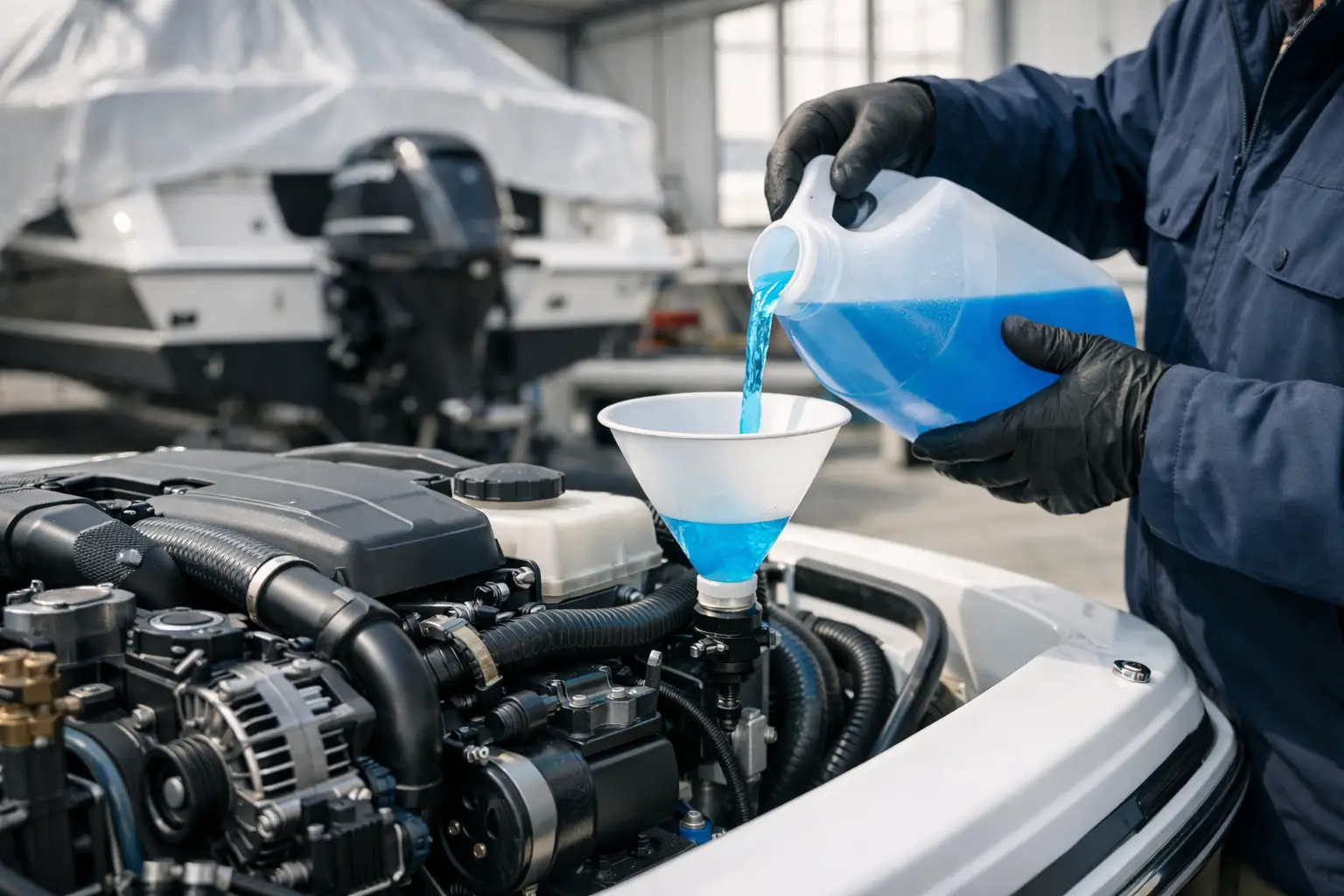
After draining, many owners circulate non-toxic marine antifreeze through the system using a flush attachment, winterization kit, or feed hose. Continue until antifreeze appears at the exhaust outlet in the expected concentration. Do not assume pink color alone proves full freeze protection. Antifreeze can be diluted by water trapped in the system, which is why thorough draining first matters.
Closed-Cooling Engines
A closed-cooled engine uses coolant inside the engine block, much like an automotive system, while raw water cools the heat exchanger and often the exhaust components. Check the engine coolant’s concentration and condition according to the manufacturer specification. Then winterize the raw-water side separately. The heat exchanger, raw-water pump, hoses, oil cooler, power-steering cooler, and exhaust components may still hold water and remain vulnerable to freezing.
Outboards and Lower Units
Outboards generally drain themselves when trimmed fully down after operation, but that does not eliminate winter service. Flush the motor as required, inspect the propeller area, and change lower-unit gear lubricant. Milky gear lube is a warning sign of water intrusion through a seal. Address it before winter rather than allowing corrosion or freeze damage to worsen unseen.
For sterndrives, inspect bellows, clamps, and the drive unit while access is easy. Service the gear lubricant and look for water contamination here as well.
Fog the Engine Only When the Manufacturer Calls for It
Fogging oil coats internal metal surfaces to help prevent corrosion during long storage periods. It is common on many carbureted engines and selected two-stroke applications. However, several modern fuel-injected engines have manufacturer-specific instructions, and some should not be fogged through the intake in the traditional manner.
Follow the exact procedure for your engine. Depending on the design, that may involve spraying fogging oil into the intake while the engine runs, treating cylinders directly through spark-plug openings, or skipping the process altogether. Guessing can foul plugs, affect sensors, or create a difficult first start in the spring.
Service the Battery and Inspect the Rest of the Boat
A neglected battery can freeze, sulfate, or lose enough charge to fail by spring. Disconnect the battery after recording any required electronic settings, clean the terminals, and store it in a dry location on a quality maintenance charger if practical. Check electrolyte level only on serviceable flooded batteries and follow battery-maker guidance.
Before covering the boat, inspect belts, hoses, clamps, wiring, and engine mounts. Look for fuel seepage, corrosion around electrical connections, worn hoses, or damaged insulation. This is also a good time to lubricate control cables and service points identified in the manual.
Use a breathable cover and provide ventilation. A tightly sealed boat can trap moisture, encouraging mildew, corrosion, and unpleasant odors. Remove valuables, food, wet gear, and electronics that should not spend months in an unheated boat.
Avoid the Shortcuts That Create Spring Problems
The most common winterization failures come from incomplete drainage, untreated fuel, skipped gear-lube service, and assuming one engine’s procedure applies to another. Another costly mistake is relying on a quick antifreeze run without opening drain points first. If water remains trapped behind scale or in a low hose section, it can still freeze.
Keep a simple record of the oil type and quantity used, filter part number, antifreeze protection level, gear-lube condition, battery status, and any repairs needed before launch. Shops, fleets, and operators with multiple boats save real time in spring when that information is already documented.
A disciplined winterization job protects more than an engine. It protects launch schedules, family weekends, charter revenue, and the maintenance budget. Give each system the same attention you would give it before a long run offshore, and your boat will be far better positioned to start cleanly when the water opens again.