ATF vs CVT Fluid and What Your Transmission Needs
A transmission service can go wrong before the drain plug is even removed. The bottle may say transmission fluid, the color may look familiar, and the price may be tempting. But ATF vs CVT fluid is not a matter of choosing one general-purpose lubricant over another. These fluids are engineered for different transmission designs, friction requirements, hydraulic controls, and operating temperatures.
Using the wrong fluid can cause poor engagement, shudder, slipping, overheating, warning lights, and accelerated internal wear. For a personal vehicle, that can mean an expensive repair. For a shop, fleet, contractor, or equipment operator, it can also mean preventable downtime and a frustrated customer. The correct fluid specification is part of the repair, not an optional detail.
ATF vs CVT Fluid: The Core Difference
Automatic transmission fluid, commonly called ATF, is formulated for conventional automatic transmissions. Most of these transmissions use planetary gearsets, hydraulic circuits, clutch packs, and usually a torque converter. ATF must lubricate internal parts, transfer hydraulic pressure, manage heat, protect against wear and oxidation, and provide controlled friction for clutch engagement.
CVT fluid is made for continuously variable transmissions. Rather than shifting through a fixed series of gears, many belt-and-pulley CVTs vary drive ratio through adjustable pulleys connected by a steel belt or chain. That design requires highly specific friction behavior where the belt or chain contacts the pulleys. The fluid also has to protect components under extreme contact pressures while maintaining stable viscosity and control response.
The two fluids may share broad jobs such as lubrication, cooling, and hydraulic operation. Their friction characteristics, additive systems, and required performance standards are not the same. That is why a conventional ATF should not be substituted for a CVT fluid, and CVT fluid should not be poured into a conventional automatic unless the vehicle manufacturer specifically calls for it.
Why Friction Control Matters So Much
Transmission fluid does more than make moving parts slippery. In an automatic transmission, the fluid needs carefully calibrated friction properties so clutch packs can engage smoothly without excessive slip. If the friction curve is wrong, drivers may feel delayed shifts, harsh shifts, flare between gears, or torque-converter clutch shudder.
In a belt-type CVT, the fluid must help the belt or chain grip the pulley surfaces without damaging them. Too little friction can contribute to belt slip and heat. Too much or the wrong kind of friction can interfere with smooth ratio changes and place stress on internal parts. CVT operation is heavily dependent on precise hydraulic control, so viscosity stability also matters across cold starts, stop-and-go driving, towing, hot weather, and long service intervals.
A fluid that is merely close is not necessarily close enough. Modern transmissions are tightly calibrated systems, and the correct specification protects both mechanical parts and electronic control strategy.
Fluid Color Is Not a Reliable Identifier
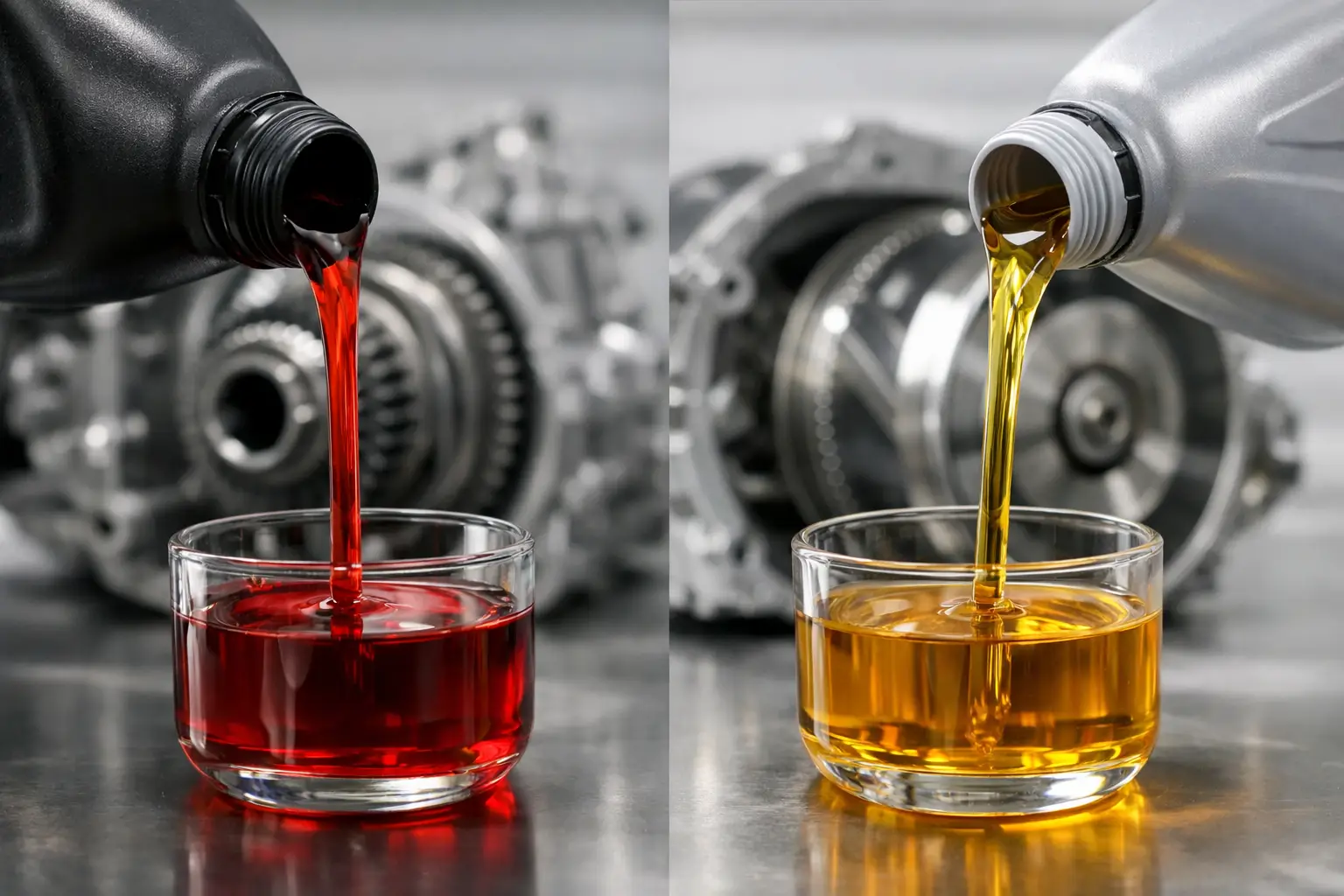
Many drivers were taught that red fluid means automatic transmission fluid. That shortcut is no longer dependable. ATF may be red, blue, green, amber, or another color depending on the formulation and manufacturer. CVT fluid can also vary in color. New fluid color does not prove compatibility, and used fluid darkens with age and heat.
The transmission owner’s manual, service information, vehicle identification number lookup, and the fluid label are more reliable than appearance. Match the exact manufacturer requirement, including the specification name or approved application statement.
How to Identify the Correct Transmission Fluid
Start with the vehicle’s owner’s manual. Look for the transmission-fluid specification, not simply the words automatic transmission fluid. Manufacturers often identify a proprietary standard, and those standards can vary between model years, engines, and transmission options within the same vehicle line.
Next, confirm the actual transmission installed in the vehicle. This is especially useful for shops and fleets servicing mixed equipment. A vehicle model may be available with a conventional automatic, a CVT, a dual-clutch transmission, or a hybrid drive system. The badge on the vehicle does not always tell the whole story.
Then check the fluid product label and technical application information. Quality aftermarket fluids may be formulated to meet or exceed defined specifications, but the product must explicitly cover the required application. Do not assume that a premium synthetic fluid is suitable for every transmission just because it is high quality.
Finally, consider service history. If the vehicle has unknown maintenance records, identify what fluid is required before topping off or performing a drain-and-fill. Mixing incompatible fluids can alter the final friction properties enough to create performance problems, even when the wrong fluid represents only part of the total fill.
Not Every Automatic Is the Same
The phrase automatic transmission covers several designs, and each may have separate fluid needs. Conventional stepped automatics may require a specific low-viscosity ATF, a high-friction ATF, or a manufacturer-defined fluid standard. Older transmissions can require a different formulation than current electronically controlled units.
Dual-clutch transmissions are another area where assumptions cause trouble. Some use wet clutches and specialized dual-clutch fluid. Others use dry clutches and have separate gear-oil requirements. They are not automatically compatible with standard ATF or CVT fluid.
Hybrid and electric vehicles add another layer. Some hybrid transaxles use a fluid that resembles ATF in application, while others have unique requirements tied to electric motor components, copper compatibility, electrical properties, and cooling demands. An eCVT in a hybrid is not necessarily the same thing as the belt-and-pulley CVT found in many gasoline-powered passenger vehicles.
For commercial operators, this is a strong reason to organize lubricant inventory by exact equipment requirement rather than keeping one transmission-fluid drum for every vehicle. The right inventory plan reduces misapplication risk, protects assets, and makes service work more consistent across technicians and locations.
When a Universal Fluid May Be Appropriate
Some multi-vehicle ATFs are formulated to cover a range of specified conventional automatic transmission applications. That can be valuable for a shop or fleet that needs to simplify inventory without compromising on required performance. The key word is specified. A multi-vehicle ATF is appropriate only when its documented application coverage includes the exact transmission requirement.
The same principle applies to multi-vehicle CVT fluids. A quality synthetic CVT fluid may cover numerous approved CVT specifications, but it is not a blank check for every CVT ever built. Certain manufacturers and transmission designs require dedicated fluid chemistry, and some applications have explicit restrictions.
Universal does not mean interchangeable. It means a single product may meet multiple defined standards. Read the application coverage before filling the transmission.
Service Intervals Depend on How the Vehicle Works
Transmission fluid life depends on more than mileage. Towing, hauling, commercial deliveries, mountain grades, high ambient temperatures, short-trip operation, frequent idling, off-road use, and stop-and-go traffic all increase heat and workload. Heat breaks down fluid over time, reducing oxidation resistance, viscosity control, and friction performance.
A vehicle driven lightly on the highway may follow a longer factory interval, while the same model used for trailer towing or daily fleet service may need more frequent attention. Follow the manufacturer’s severe-service schedule when the operating conditions fit. For critical vehicles, fluid analysis and documented maintenance records can help support smarter service decisions.
A drain-and-fill is often different from a complete fluid exchange because a significant amount of fluid can remain in the torque converter, cooler lines, valve body, or transmission case. The proper method depends on the vehicle, transmission condition, manufacturer procedure, and service objective. A rushed flush with the wrong fluid is not maintenance.
Warning Signs That Deserve Attention
Transmission symptoms do not automatically mean the fluid is the only problem, but they should not be ignored. A delayed shift into drive or reverse, shudder during light acceleration, slipping under load, harsh engagement, overheating messages, whining, or a burning odor can all justify inspection.
Check for leaks, confirm fluid level using the correct factory procedure, and identify the specified fluid before adding anything. Many late-model transmissions do not use a traditional dipstick and require a particular temperature range and fill process. Overfilling can aerate the fluid and create problems just as surely as running low.
For shops and fleet managers, record the fluid brand, product specification, quantity, date, mileage, and any observed symptoms. That documentation helps protect the customer, supports diagnostic work, and reduces repeated mistakes.
Oil Jobber supplies premium synthetic lubricant options for operators who need dependable protection and clear application guidance. Whether you are servicing one vehicle or managing a mixed fleet, the goal is the same: match the fluid to the machine and keep costly downtime out of the schedule.
The practical next step is simple: before ordering or pouring transmission fluid, verify the exact transmission and specification. That few minutes of confirmation can protect the transmission for years of hard service.