When Should Gear Oil Be Changed? Key Signs
A differential that starts whining on the highway, a transfer case that shifts roughly, or a gearbox that runs hotter than usual is already asking for attention. The better question is not only when should gear oil be changed, but whether the lubricant in your axle, transmission, gearbox, or equipment is still capable of carrying the load.
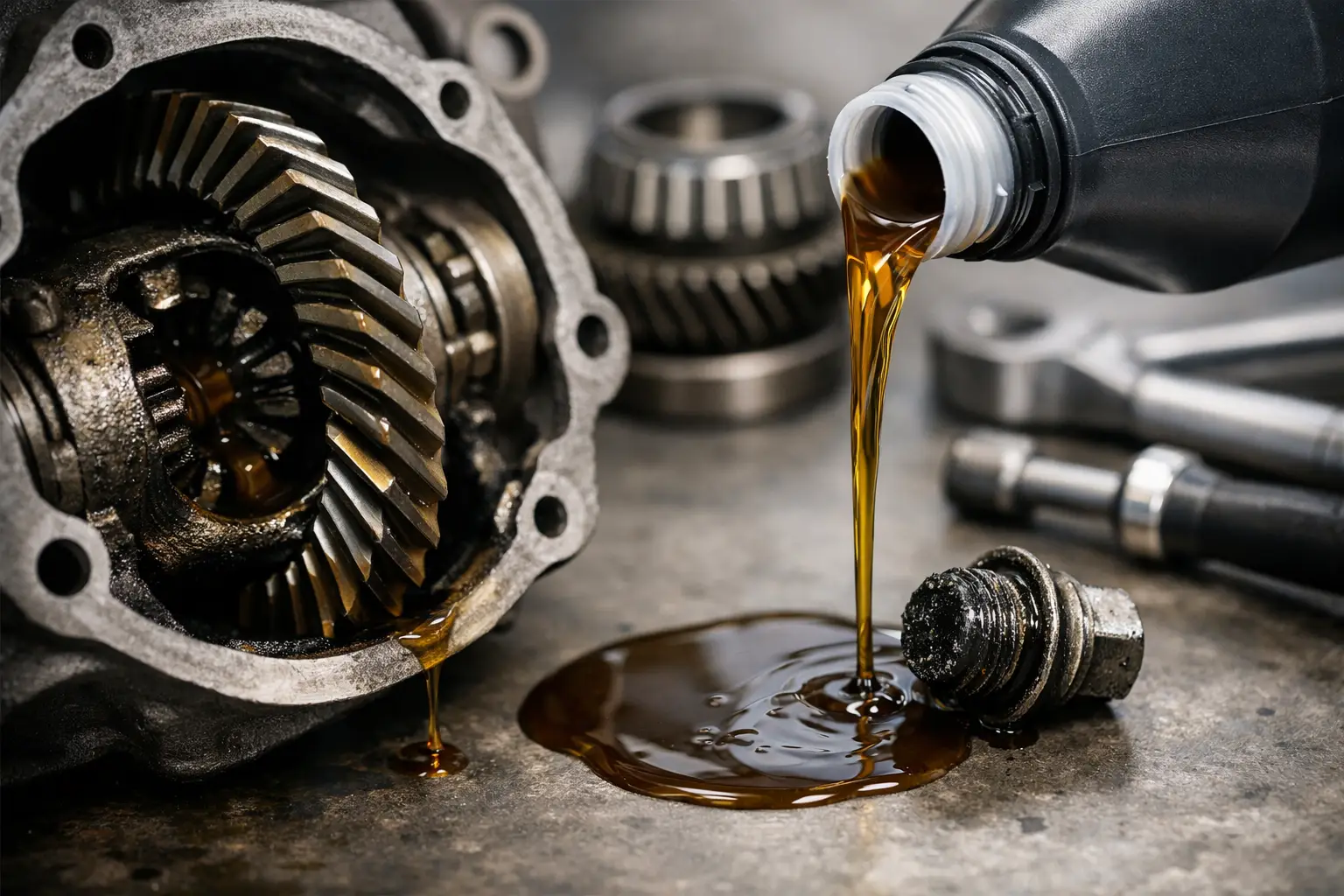
Gear oil is built to protect heavily loaded gear teeth, bearings, and clutch components from metal-to-metal contact. It handles extreme pressure, resists heat, fights corrosion, and moves contaminants away from working surfaces. But it does not last forever. Time, heat, moisture, towing, dust, and repeated heavy loads can reduce its protection well before a component fails.
When should gear oil be changed?
Start with the service interval in the owner’s manual or maintenance schedule for the specific vehicle or machine. That recommendation accounts for the component design, required viscosity, and lubricant specification. For many passenger vehicles under normal driving conditions, differential gear oil intervals commonly fall between 30,000 and 60,000 miles. Some modern vehicles specify longer intervals, while others require earlier service.
Severe service changes the calculation. Trucks that tow, haul, plow snow, work off-road, or spend long hours in stop-and-go traffic create more heat in the differential and transfer case. Commercial fleets, agricultural equipment, construction machines, boats, ATVs, UTVs, and performance vehicles may need gear oil service based on operating hours, seasonal use, or fluid analysis rather than a simple mileage number.
If the manufacturer provides both normal and severe-duty schedules, use the severe-duty interval whenever the equipment regularly works hard. Waiting for the longest possible interval may save a few dollars today, but it can expose expensive driveline components to unnecessary wear.
Why gear oil service intervals vary
Gear oil does not live the same life in every application. A lightly used commuter car sees a very different workload than a diesel pickup pulling a loaded trailer through mountain grades. The difference is heat, load, contamination, and operating time.
High temperatures accelerate oxidation. As oil oxidizes, it can thicken, form deposits, and lose its ability to flow quickly to bearings and gear meshes. Extreme-pressure additives are also consumed over time as they protect heavily loaded surfaces. This is particularly relevant in hypoid differentials, where sliding contact between gear teeth places intense pressure on the lubricant film.
Water is another major concern. A submerged axle vent, deep water crossing, failed seal, or humid marine environment can introduce moisture into the lubricant. Water reduces film strength and promotes rust on gears and bearings. In off-road, marine, and work equipment applications, checking gear oil after water exposure is a practical maintenance step, not an optional one.
Contamination matters as well. Fine metal particles from normal break-in and wear can circulate through the oil. A magnetic drain plug may capture some of that material, but it does not restore depleted additives or remove every contaminant. Fresh, correctly specified gear oil gives the component a clean, protective operating environment.
Change gear oil sooner under severe use
A calendar or odometer is useful, but operating conditions should lead the decision. Consider an earlier gear oil change if the vehicle or equipment is regularly exposed to four or more of these conditions:
- Heavy towing, hauling, or repeated high-load operation
- Off-road driving, mud, deep water, or dusty job sites
- Long idle periods followed by hard work or high-speed runs
- Extreme heat, extreme cold, or steep-grade operation
- Racing, plowing, commercial delivery, or fleet duty
- Unknown maintenance history after buying used equipment
For a work truck, the rear differential can be one of the most overlooked service items. It is also one of the parts most affected by payload and towing. The same applies to a UTV used for property work, a tractor operating during peak season, or a boat that sees long periods under load. Gear oil service is inexpensive compared with differential, lower-unit, or gearbox repair.
New equipment and break-in service
New or rebuilt components may have a specific early service recommendation. During break-in, gears and bearings shed a small amount of material as surfaces mate. Follow the manufacturer’s schedule closely, especially for new differentials, manual transmissions, final drives, and heavy equipment gearboxes.
Do not assume that a premium synthetic lubricant eliminates the need for break-in or scheduled service. High-quality synthetic gear oil can provide excellent thermal stability, cold-flow performance, and wear protection, but the application’s service requirements still control the interval.
Warning signs your gear oil needs attention
The most reliable approach is scheduled maintenance, but symptoms can signal that the oil or component needs inspection. A whine, howl, rumble, or clunk from the axle or gearbox deserves prompt diagnosis. Noise does not automatically mean the gear oil is the sole problem, yet delaying service and inspection can turn a manageable issue into major damage.
Pay attention to burnt odors, fluid leaks around axle seals or covers, difficult shifting in a manual transmission, unusual vibration, or excessive heat. If you inspect the drained fluid and find a milky appearance, water contamination is likely. Dark fluid alone is not always a verdict, but a burnt smell, visible debris, or heavy metallic paste on the drain plug calls for a closer look.
Limited-slip differentials require extra care. Many require a lubricant with the correct friction characteristics or a compatible limited-slip additive. Using a standard gear lubricant where a limited-slip formulation is required can lead to chatter during turns and poor clutch-pack performance. Always verify the axle tag, owner’s manual, or service documentation before filling.
Choose the correct gear oil, not just a heavier one
Gear oil selection is more than choosing a viscosity on the shelf. The fluid must meet the required performance specification, such as the appropriate API GL rating, OEM approval, limited-slip requirement, or wet-clutch compatibility where applicable. A product that is excellent for one differential may not be right for a synchronized manual transmission or a marine lower unit.
Viscosity matters because it determines how the oil flows at startup and maintains film strength at operating temperature. A 75W-90 synthetic gear lubricant may be an excellent all-around choice for many axles, while 75W-140 may be specified for high-load towing applications. The correct answer is always the fluid required for that component, not the thickest product available.
Synthetic gear lubricants are especially valuable where equipment sees temperature swings, sustained towing, high-speed operation, or extended drain intervals approved by the manufacturer. Their resistance to thermal breakdown and ability to flow in cold conditions can support consistent protection when conventional lubricants are under stress. That performance benefit only counts when the product matches the equipment specification.
A practical gear oil maintenance routine
For owner-operated vehicles, record the mileage and date each time differential, transfer case, manual transmission, or gearbox oil is changed. For fleets and commercial equipment, tie service intervals to mileage, engine hours, load profile, and maintenance records. Consistency is what prevents missed service on components that do not get inspected as often as engine oil.
When changing gear oil, inspect the drain plug, seals, vent, and drained fluid. Clean the magnetic plug if equipped, replace sealing washers when required, and refill to the specified level. Overfilling can create foaming and seal leaks, while underfilling starves gears and bearings of lubrication. Use the proper fill procedure for the component, particularly on vehicles that must be level during service.
For high-value assets or extended drain programs, oil analysis can provide better information than a fixed interval alone. It can identify wear metals, contamination, viscosity changes, and moisture before a problem becomes visible. That is particularly useful for fleets, heavy equipment, agricultural operations, and performance applications where downtime has a direct cost.
Protect the components that keep work moving
Differentials, transfer cases, final drives, and gearboxes rarely demand attention until they are damaged. That is exactly why they deserve a disciplined maintenance plan. Use the manufacturer’s interval as the baseline, shorten it for severe service, and respond quickly to leaks, noise, water exposure, or evidence of overheating.
Oil Jobber supplies premium AMSOIL synthetic gear lubricants and application-focused support for vehicles and equipment that cannot afford avoidable downtime. The right fluid, changed at the right time, helps protect the driveline long after the job gets tough.