How to Choose Oil Filters That Protect Your Engine
A filter that threads on is not automatically the right filter. The wrong bypass setting, insufficient contaminant capacity, or poor fit can put an engine at risk long before the next service interval. Knowing how to choose oil filters means looking beyond the box size and selecting a filter built for the engine, oil, operating conditions, and drain interval you actually run.
For a daily-driven car, that may be a straightforward application-specific filter. For a diesel pickup that tows, a landscape fleet that idles in dust, or a piece of equipment that cannot afford downtime, filtration deserves the same attention as oil selection. A quality filter supports clean oil flow, captures harmful debris, and helps protect the moving parts that keep your operation productive.
Start With the Exact Engine Application
Fitment is the first requirement, and it goes beyond whether the filter screws onto the mounting base. Use the vehicle or equipment year, make, model, engine, and, when applicable, VIN or engine serial number to identify the correct application. Commercial equipment, powersports machines, and marine engines often have production changes that make a generic part-number match unreliable.
The correct filter must have the proper gasket diameter, thread pitch, canister dimensions, anti-drainback valve design, and bypass-valve setting. A filter with a similar thread may still have the wrong gasket position or pressure specification. That can lead to leaks, delayed oil pressure, or restricted flow.
Do not choose a physically larger filter simply because it appears to offer more media area. Some engines have room for a larger canister and may support an approved alternate filter, but clearance, oil-system design, and manufacturer requirements still matter. Follow the equipment manufacturer’s specification or use a verified application guide.
Spin-On, Cartridge, and Specialty Designs
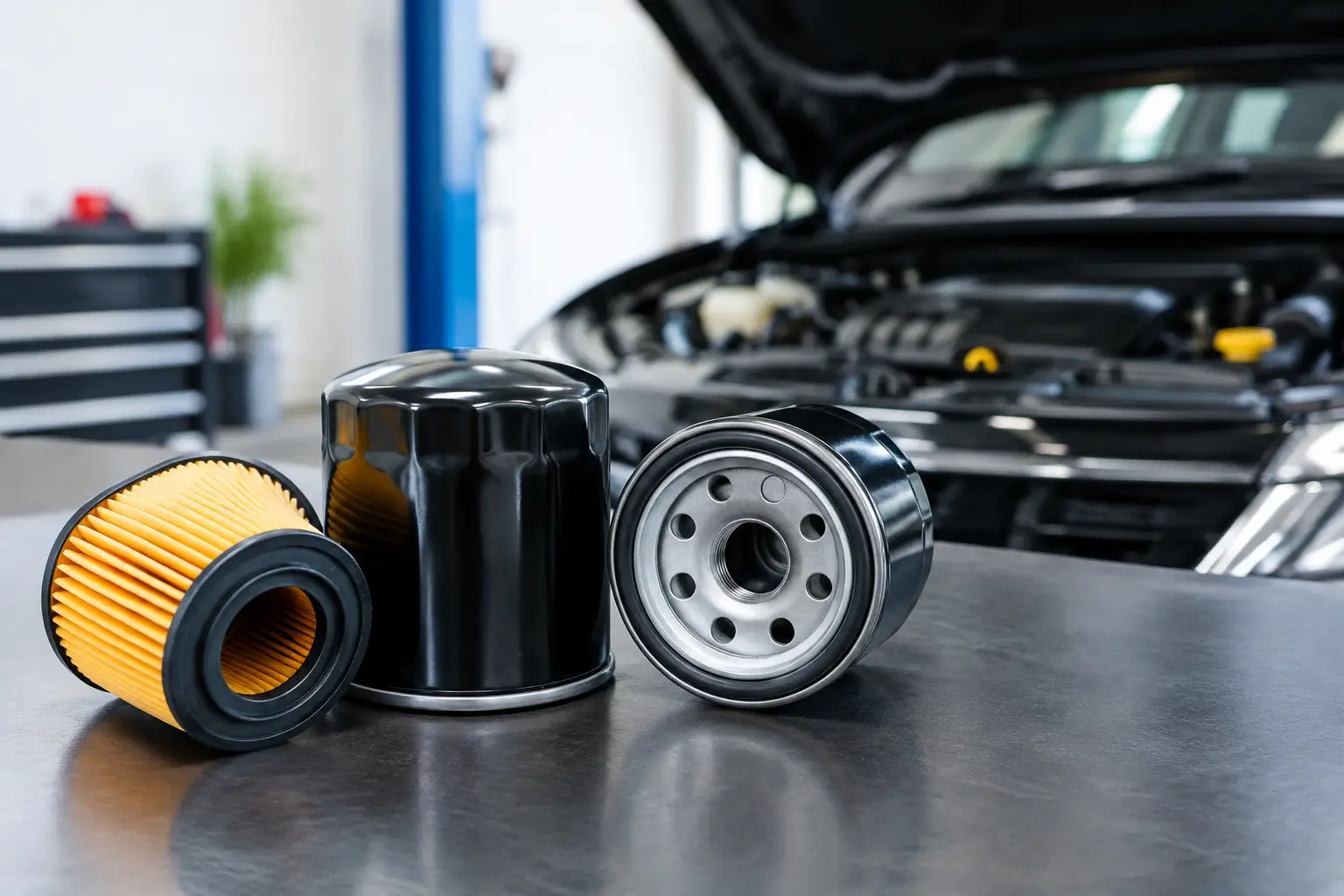
Most passenger vehicles, trucks, and many engines use spin-on filters. These contain the filter media, base plate, valves, and gasket in one replaceable canister. Cartridge filters use a replaceable internal element inside a reusable housing, common on many modern gas and European applications. Their housing cap, O-rings, and installation torque require careful attention.
Some heavy-duty, agricultural, and industrial systems also use bypass filters, remote-mounted filters, or centrifugal filtration. These are not substitutes for the full-flow filter unless the system was designed that way. A full-flow filter protects the engine every time oil circulates. A bypass system cleans a smaller portion of the oil at a finer level over time.
Match Filtration Efficiency With Oil Flow
A filter’s job is to capture contaminants without starving the engine of oil. That balance is why the highest advertised efficiency is not always the only specification that matters.
Filtration efficiency describes how effectively media captures particles of a stated size. You may see ratings expressed in microns or through beta ratios. In practical terms, finer filtration can remove more small abrasive particles, which helps reduce wear. But very fine media must also maintain sufficient flow, especially during cold starts, high-RPM operation, and severe-duty use.
A quality filter uses media engineered to hold contaminants while allowing oil to move through it as the engine demands. Synthetic or synthetic-blend media often provides stronger flow and capacity characteristics than basic cellulose-only media, particularly through long service intervals and temperature swings. Construction and media design matter more than a single marketing number printed on the package.
For normal manufacturer-recommended oil changes, a quality application-specific full-flow filter is usually the right choice. If you use extended-drain synthetic oil, operate in severe heat or cold, tow heavy loads, race, idle extensively, or run equipment in dirty environments, select a filter designed for that workload and interval.
Choose Enough Contaminant Capacity for the Service Interval
Capacity is the amount of dirt, soot, metal particles, oxidation byproducts, and other debris a filter can hold before restriction becomes a concern. It is especially important for diesel engines, off-road equipment, high-mileage engines, and fleets that work in dust or idle for extended periods.
As filter media loads up, pressure differential across the media increases. When that pressure reaches the bypass-valve setting, the filter may allow oil to bypass the media so the engine continues receiving lubrication. That is better than oil starvation, but it means unfiltered oil can circulate. A filter with inadequate capacity for the interval may spend more time in bypass than the operator realizes.
This is one reason oil and filter intervals must be considered together. Premium synthetic oil can provide strong protection and resist breakdown over longer intervals, but the filter must be capable of supporting the same plan. Extending oil life without verifying filter capacity is not a maintenance strategy.
For commercial operators, look at the full operating picture: hours, mileage, idle time, load, ambient temperature, fuel quality, and environmental exposure. Oil analysis can help determine whether an extended interval is appropriate. It also reveals soot, fuel dilution, wear metals, and contamination trends that a calendar-based schedule may miss.
Inspect the Parts That Protect Oil Pressure
A filter is more than filter media. Its internal valves can determine what happens during startup, cold weather, and restricted-flow conditions.
Anti-Drainback Valve
The anti-drainback valve helps keep oil in the filter when the engine is shut off. This is particularly valuable when the filter mounts sideways or base-down, where oil can drain back more easily. A dependable silicone valve generally holds up better under high heat and long service intervals than lower-grade materials.
When the valve does not seal properly, the engine may experience a longer delay before oil pressure builds after startup. That moment matters because many wear events occur before full lubrication reaches critical components.
Bypass Valve
The bypass valve opens when oil is too thick, the filter is restricted, or the pressure differential is high enough that flow through the media could be limited. The valve setting must match the engine’s oil-system requirements. A valve that opens too easily can allow unnecessary bypass. One that opens at the wrong pressure can compromise oil delivery under demanding conditions.
This is why a verified, engine-specific filter is safer than selecting by canister size or thread alone.
Gasket, Base Plate, and Canister Strength
Inspect the sealing gasket during installation and confirm the old gasket came off with the removed filter. A double gasket can cause a severe oil leak almost immediately after startup. The base plate, center tube, end caps, and canister also need to withstand pressure pulses, vibration, and heat without deforming or leaking.
For hard-working diesel trucks, racing engines, and equipment exposed to vibration or high operating pressure, durable construction is not an extra. It is part of protecting uptime.
Consider Your Operating Conditions Honestly
The right filter for a lightly used commuter may not be the right choice for a work truck pulling a trailer through summer heat. Severe service includes more than extreme off-road use. Short trips that never fully warm the oil, long idle periods, stop-and-go driving, towing, high dust exposure, cold starts, and high-RPM operation all increase stress on the oil and filter.
A contractor running skid steers and mowers in dusty conditions may need tighter maintenance intervals even with premium filtration. A fleet operating mostly highway miles at steady temperature may have a better case for condition-based intervals supported by oil analysis. The goal is not to buy the most expensive filter for every engine. The goal is to buy the filter that matches the risk and delivers dependable protection at the planned interval.
If your engine is under warranty, remain within the manufacturer’s required maintenance schedule and use filters that meet the applicable specification. Keep service records, including mileage or hours, oil type, filter part number, and receipts. That discipline helps protect both the equipment and the business behind it.
Avoid the Common Filter Buying Mistakes
Price-only decisions are costly when they lead to poor capacity, weak valves, or a short-lived gasket. A low upfront price can disappear quickly if the filter forces shorter intervals, contributes to a leak, or fails to support clean oil flow under load.
Another mistake is changing the oil while leaving an older filter in service. Used media holds contamination, and the filter may already be partway through its capacity. Unless the equipment manufacturer and filter supplier specifically support a different schedule, change the oil filter with the oil.
Also avoid overtightening. Lubricate the gasket with clean oil, install the filter according to its instructions, and tighten it by the specified amount. A filter wrench is usually for removal, not for crushing a new filter into place. After startup, verify oil pressure and inspect for leaks.
Build Filtration Into a Better Maintenance Plan
Oil filtration works best as part of a complete lubrication program. Use the correct viscosity and specification for the engine, choose a filter designed for the interval and service conditions, and document results over time. For fleets and businesses, standardizing approved oils and filters across similar equipment reduces purchasing errors and makes maintenance planning easier.
Oil Jobber helps operators and businesses source premium AMSOIL lubricants and filtration solutions for the engines they rely on. Whether you maintain one truck or a mixed fleet, the right filter choice can help reduce wear, avoid preventable downtime, and get more useful life from every oil change.
The next time a filter is due, treat it as an engine-protection component rather than a commodity. Verify the application, match the capacity and construction to the work, and give clean oil the path it needs to do its job.